Exclusive Thought Leadership for GoodCloudStorage.net
If you look back at the marketing materials for consumer cloud storage from a decade ago, the pitch was remarkably uniform. Whether it was Google Drive, Dropbox, iCloud, or OneDrive, the core message was essentially the same: “Never lose a file again. Here is a massive digital box; put all your stuff in it.” The industry operated on a simple, real-estate-driven business model. Tech giants built massive, sprawling data centers, partitioned them into millions of tiny digital apartments, and rented out that square footage to the public. We bought 50 gigabytes. When that filled up, we upgraded to 200 gigabytes. Eventually, we found ourselves paying monthly for 2 terabytes or more. We treated the cloud like an infinite digital attic, endlessly shoving our photos, documents, tax returns, and digital debris into the dark, promising ourselves that one day, when we had the time, we would “organize it all.”
Here we are in 2026, and that mythical “someday” never arrived. Instead, the rules of the game have entirely changed.
If you are reading this on GoodCloudStorage.net, you already know that the market has reached a critical inflection point. The commodity of “empty space” has plummeted to a value of near-zero in the eyes of the everyday user. Today, consumers are no longer paying for a passive digital locker; they are paying for an active digital brain.
Here is a deep dive into the latest trends reshaping the consumer cloud storage landscape, why the old model is broken, and what the future of our digital memories actually looks like.
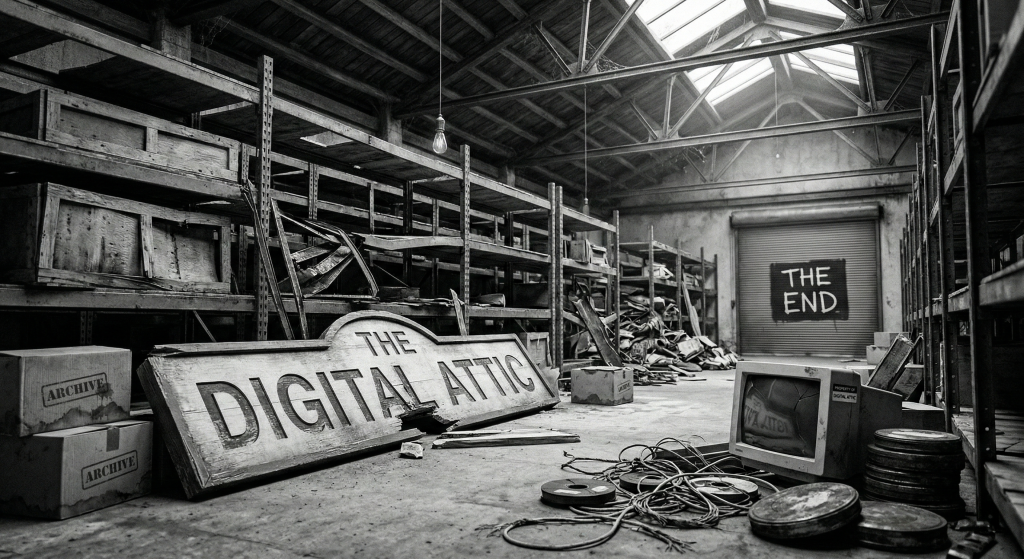
The End of the “Digital Attic” and the Burden of Digital Hoarding

To understand where the consumer cloud is going, we first have to acknowledge the failure of where it has been. The old paradigm of cloud storage relied on the user to be the archivist. We were expected to create intricate folder structures, meticulously name our files, and curate our digital lives.
That expectation collided violently with the reality of modern data creation. Today, the average smartphone user generates an absolute avalanche of data. We shoot videos in 4K and 8K. We take 15 burst-photos just to get one good shot of the dog. We save hundreds of voice notes, download countless PDFs, and take screenshots of recipes we will never cook.
The friction for the modern consumer is no longer in storing the data—we have plenty of space. The friction is in finding it, using it, and making sense of it. We are drowning in our own memories. The psychological burden of digital hoarding is a real phenomenon; users feel overwhelmed by the sheer volume of their uncurated digital footprint.
The companies winning the consumer market today have realized a fundamental truth: asking consumers to manually organize their cloud is like asking them to manually route their own internet traffic. It is an impossible, outdated expectation. The future belongs to platforms that do the heavy lifting for us.
Enter the AI Archivist: The Death of “Dumb” Space
We have officially entered the era where “dumb” storage space is obsolete. The baseline expectation for a premium cloud storage provider in 2026 is robust, deeply integrated Artificial Intelligence. But this isn’t the generative AI that writes poems or codes websites; this is highly specialized, utilitarian AI designed to act as your personal, invisible archivist.
Semantic Search and Generative Recall The days of searching for a file by guessing its file name (e.g., IMG_4921.JPG) are over. The modern consumer cloud utilizes advanced semantic search. You can open your cloud app and type, “the blue shirt I wore in Tokyo,” or “that PDF receipt for the toaster I bought last Christmas,” and the AI instantly surfaces the exact file. It understands context, objects, locations, and time without you ever having to tag a single photo or document.
Automated Decluttering Consumers are tired of paying for storage filled with digital junk. Modern cloud ecosystems now feature autonomous decluttering engines. They silently group the 15 identical burst photos you took, suggest the single best frame based on lighting and focus, and offer to delete the rest. They identify blurry videos, redundant screenshots, and outdated temporary files, offering a one-tap solution to reclaim gigabytes of space.
Intelligent Compression Why store a massive 4K video of a mundane moment at full resolution if you haven’t looked at it in five years? Smart clouds now intelligently manage file fidelity. They keep recent and frequently viewed files in native high-resolution, while applying visually lossless compression to older, untouched files, stretching the consumer’s storage dollar further than ever before.
In short, the value proposition has shifted from capacity to capability. We don’t want a bigger attic; we want a butler who knows exactly where everything is stored.
The Rise of the “Personal Data Ecosystem”
Historically, cloud storage was a standalone destination. You opened an app, uploaded a file, and closed the app. Today, standalone storage is losing massive ground to integrated ecosystems. The cloud has become the invisible connective tissue of our daily lives.
Consumers no longer view their laptops, smartphones, smart TVs, and wearables as separate devices. They view them as different windows into the exact same digital life. The modern consumer cloud must seamlessly facilitate this.
When a user takes a stunning panoramic photo on their smartphone while on vacation, they expect that photo to be available as the ambient background on their living room smart TV by the time they get home. When they dictate a voice memo into their smartwatch during a morning run, they expect to see a fully transcribed, searchable text document waiting on their tablet when they sit down to work.
This trend is forcing traditional cloud storage providers to evolve into platform-agnostic sync engines. The providers that force users into walled gardens or make cross-platform sharing difficult are bleeding subscribers. The winners are those who build frictionless, API-driven connections that allow data to flow like water between every screen a consumer owns.
The Privacy Paradox: Zero-Knowledge in the Age of AI
This monumental shift from passive storage to active, AI-driven intelligence comes with a steep new mandate for tech leaders: Absolute, provable trust.
As our personal clouds become smarter, they also become significantly more intimate. The same AI that can flawlessly identify your child’s face in a crowd of thousands, or read the text on your confidential medical documents to make them searchable, is technically capable of exploiting that deeply personal data.
In the wake of the generative AI boom, consumers have become hyper-aware—and highly suspicious—of how their data is used. They know that personal photos, private journals, and creative writing are incredibly valuable training material for Large Language Models (LLMs).
This has birthed the “Privacy Paradox.” Consumers desperately want the magical, life-simplifying benefits of an AI-organized cloud, but they also want absolute certainty that their private lives are not being fed into a public algorithm or viewed by corporate engineers.
Because of this, Zero-Knowledge Architecture and End-to-End Encryption (E2EE) have transitioned from being niche, cypherpunk features to primary, mainstream marketing pillars.
Consumers are increasingly migrating toward “Sovereign Cloud” solutions. These are platforms that process AI tasks locally on the user’s device (on-device machine learning) rather than in the cloud, or platforms that use advanced cryptographic techniques like homomorphic encryption. This allows the cloud to organize and search the data without ever actually “seeing” the unencrypted contents.
The next era of consumer cloud dominance will not be won by the company offering the cheapest terabytes. It will be won by the company that can deliver breathtaking AI utility while mathematically proving that they cannot see, sell, or train models on their users’ lives. Trust is the new currency of cloud storage.
Subscription Fatigue and the Resurgence of the Hybrid Home Cloud
While AI and privacy are dominating the feature wars, there is an equally powerful economic trend reshaping the consumer market: Subscription Fatigue.
As consumers hit the 2TB, 5TB, or even 10TB limits on public clouds due to the ballooning sizes of modern media formats, the monthly costs are becoming burdensome. A decade ago, $2.99 a month seemed trivial. Today, families are looking at $15, $25, or $30 a month, indefinitely, just to hold onto their memories. When you combine this with subscriptions for streaming video, music, and software, consumers are hitting a financial breaking point.
This economic pressure has sparked a massive, unexpected resurgence in consumer hardware—specifically, the Hybrid Home Cloud.
We are seeing a boom in user-friendly Network Attached Storage (NAS) devices. Historically, NAS devices were complex, clunky boxes reserved for IT professionals and serious tech hobbyists. Today, companies have redesigned them for the living room. They look like sleek smart speakers, plug directly into your home router, and feature intuitive, app-based setups that anyone can master in five minutes.
The modern consumer is adopting a hybrid model—borrowing a strategy straight from the enterprise IT playbook. They are buying a 10TB home NAS drive for a one-time cost of a few hundred dollars. They use this local drive to store their incredibly heavy files: the terabytes of 4K home videos, the raw photography archives, and the massive system backups.
They then use a smaller, cheaper public cloud subscription (like a 200GB plan) purely for essential, real-time syncing of critical documents and a curated selection of their best photos.
The home NAS devices of 2026 seamlessly bridge this gap. They come with built-in software that automatically backs up the local drive to the cloud, giving consumers the best of both worlds: the speed, privacy, and zero-monthly-cost of local storage, combined with the off-site redundancy and remote access of the public cloud.
Digital Legacy: What Happens to the Cloud When We Are Gone?
Finally, as the consumer cloud matures, a profound new trend has emerged regarding our digital mortality. We now have a generation of users who have documented their entire existence—from birth to retirement—in the cloud.
What happens to those decades of memories when a user passes away?
Early on, cloud providers had notoriously rigid terms of service that effectively locked grieving families out of their loved ones’ accounts, resulting in the tragic, permanent loss of family photos and documents.
Today, Digital Legacy management is a critical feature for any reputable cloud provider. Consumers are proactively assigning “Legacy Contacts”—trusted family members or friends who are granted cryptographic keys that activate only upon the user’s verified passing.
The cloud is no longer just a temporary workspace; it is the permanent, historical archive of a family’s lineage. Cloud providers are realizing that they are not just in the data storage business; they are in the digital heritage business. Platforms that offer smooth, secure, and respectful legacy transitions are earning deep loyalty from multi-generational families.
The Future Belongs to the Cognitive Cloud
We are witnessing the final days of the storage wars and the dawn of the agency wars. The average consumer on GoodCloudStorage.net is no longer asking, “How much space can I get for $5?” They are asking, “How can this service make my digital life make sense?”
The era of the digital locker is dead. We are now building digital extensions of the human memory.
The providers who will dominate the next decade are those who understand this fundamental psychological shift. They will build platforms that act as autonomous, secure, and deeply private AI assistants. They will respect the consumer’s wallet by embracing hybrid local-cloud models, and they will respect the consumer’s privacy by locking their data behind zero-knowledge encryption.
Cloud storage is no longer just about preserving the past; it is about organizing the present so we can actually enjoy the future. And for the consumer, that is the greatest upgrade of all.